
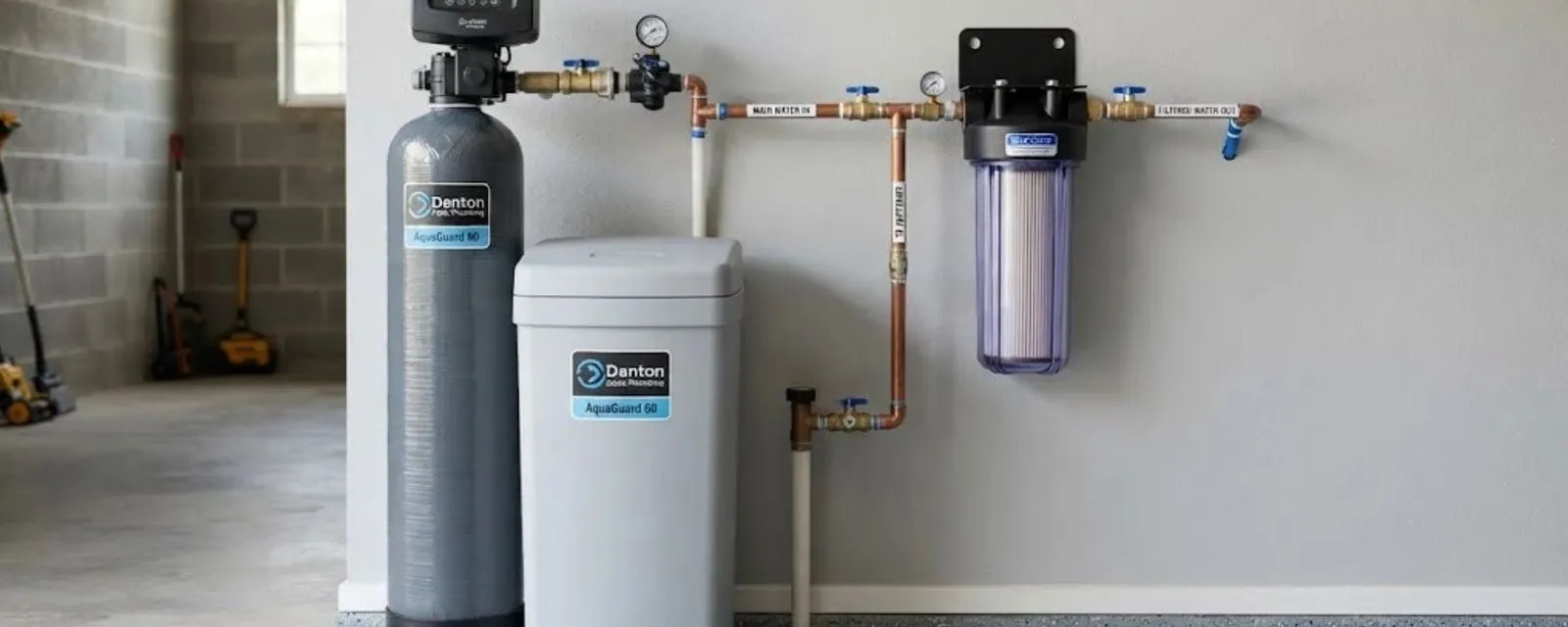
People use the words storm water filtration for two different things. One is capturing rain from a roof and treating it for garden or household use. The other is filtering runoff on a property before it leaves, which is a land and drainage topic. This guide covers both briefly, then points you to the right next step.
If your real concern is the water from your tap, our water softener and filtration page is the better match. Tap water and storm water are separate systems and need different equipment.
Rainwater capture from the roof
A basic capture setup collects roof runoff in a tank or barrel through a gutter and a first flush diverter, which sends the dirtiest early water away. Screens keep leaves and insects out. The stored water is generally used for irrigation.
Using captured rain inside the house for drinking or bathing requires much more treatment and is regulated. Do not plan indoor use without checking local rules and speaking with a qualified professional.
Filtering runoff on the property
Runoff from roofs, driveways and patios carries dirt, oil residue and debris. Landscape features such as swales, rain gardens, permeable paving and settling basins slow and clean this water before it reaches the street or the creek.
These are drainage and landscape projects, not plumbing in the strict sense, but plumbers often connect downspouts and drain lines to them. Keep roof drains separate from the sewer line, because stormwater should not enter the sanitary system.
What a filter can and cannot do
Remove debris
Screens and sediment filters catch leaves, grit and larger particles.
Reduce sediment
Finer filters lower cloudiness in stored water.
Not make it drinkable
A simple filter does not make stored rain safe to drink.
Need maintenance
Screens clog and filters wear out, so plan regular cleaning.
Where a plumber fits in
A plumber can connect gutters to underground drain lines, set up a pump for irrigation use, install backflow protection and keep the system separate from your drinking water supply. That separation matters, because a cross connection can contaminate household water.
We handle the plumbing side. For the landscape and grading side, you may also need a landscape contractor or a civil designer.
Questions to settle before you start
- What will the water be used for?
- How much roof area feeds the system?
- Where does overflow go?
- Is a permit needed for the tank or the drain work?
- Who will maintain the filters and the screens?
Keep it separate
Never connect a rainwater system to your potable plumbing without proper backflow protection and approval. A cross connection can put contaminated water into your drinking supply.
Whole house filters for tap water
If you want cleaner tap water, the right tool is a whole house sediment filter, a carbon filter or a softener, chosen after a water test. These treat the municipal water that enters the house, not storm water.
Start by testing your tap and reading your utility quality report. That tells you whether you need a filter at all, and which kind. See also leak detection if you notice a pressure drop after a filter install.
Maintenance through the year
Clean gutters and screens before the first rains and again in late winter. Check the first flush diverter and empty it after storms. Look at tank fittings and overflow lines for leaks, and keep mosquitoes out of stored water with tight screens.
In the dry season, use stored water first so the tank has room for the next storm. A system that sits full and stagnant turns into a problem.
When to bring in a professional
Call a plumber for any connection to your home plumbing, any pump, any backflow device and any change to your drain lines. Call a landscape or drainage professional for grading, basins and large capture tanks.
Being honest about which part of the project belongs to whom saves money and prevents a cross connection with your drinking water.
Rainwater and roof drain connections fall under the California Plumbing Code, which is based on the Uniform Plumbing Code (UPC).
Not sure which system you need?
Call and describe the goal. We tell you whether it is a plumbing job.
Storm drains and rain in Cupertino
Rain in the Cupertino area falls mostly in the cooler months, so a capture system fills in winter and is used in the dry season. Storm drains in the city lead to creeks, so keep oil, soap and chemicals out of them. Rain that falls on your roof is separate from your sewer system and should stay that way.
The City of Cupertino has rules about stormwater and drainage on private property, and larger projects can trigger permits. Ask the city before building tanks or basins. Plumbers in nearby Sunnyvale face the same rules from that city, and our Sunnyvale page has more.
Where we work
We dispatch from Cupertino and also serve Sunnyvale, Santa Clara, Saratoga and Los Altos. See the full service area and our water softener and filtration page for more on this topic.
Storm water and filtration questions in Cupertino
No. A whole house filter treats the water supply that comes into your home. Storm water systems deal with rain and runoff on the property.
Not without proper treatment, testing and approval. Collected rain is generally used for irrigation unless a qualified professional designs a treatment system.
Small barrels usually do not, but larger tanks and connected systems can. Ask the City of Cupertino before you build.
No. Roof drainage should not enter the sanitary sewer. A plumber can direct it to the proper outlet.
Check them regularly, especially after storms and in leaf season. Clogged screens force water over the gutter.
No. Hardness is treated with a softener or similar system. A sediment filter removes particles, not dissolved minerals.