The signs of a toilet clog are easy to spot. The water rises toward the rim, the flush is weak or the bowl drains slowly after each use. What is harder is telling a simple clog in the trap from a blockage farther down the line that will keep coming back.
This guide walks through the signs, a safe first fix and the point where a plumber is the better call. For deeper blockages, see our drain cleaning service.
The clear signs of a clogged toilet
Water rises and does not drop
After a flush, the bowl fills near the rim and drains slowly or not at all.
Weak or sluggish flush
The water swirls but does not clear the bowl in one flush.
Gurgling sounds
Air moves through the drain when it should not, which points to a partial blockage or a vent problem.
Repeated clogs
If the toilet clogs every few days, the cause is likely beyond the bowl.
Water appears elsewhere
Water in a nearby tub or floor drain when you flush means the main line is affected.
Simple clog or bigger problem
Run the other fixtures. If only the toilet is slow, the clog is probably in the toilet trap or its short drain. If the sink, shower and toilet all drain slowly, or the toilet bubbles when you run the washer, the blockage is in the main line.
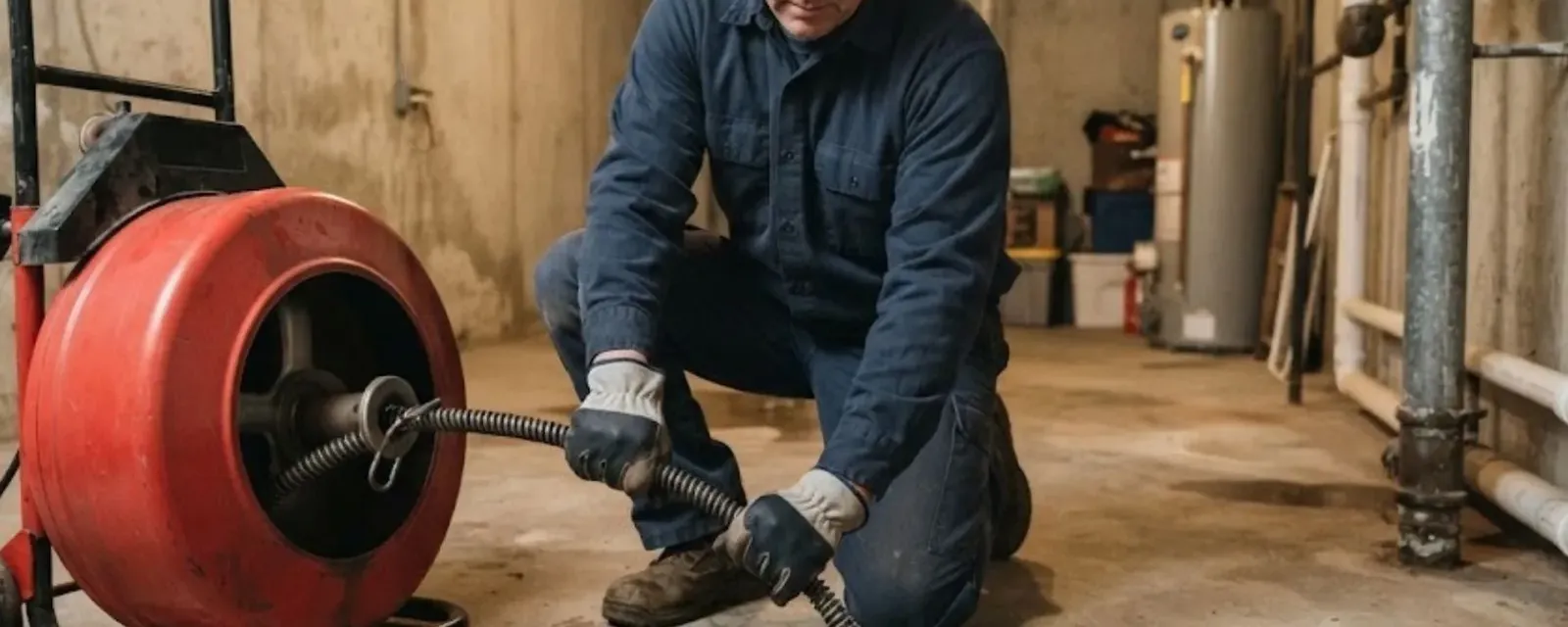
A main line blockage is not a plunger job. It may need a cable machine, and if it keeps returning, a camera to see why. Our sewer line cleaning page explains the process.
What to try first
- 1
Stop flushing.
Do not flush again. Each flush adds water and can overflow the bowl.
- 2
Protect the floor.
Put towels down and open a window if the smell is strong.
- 3
Use a flange plunger.
A flange plunger seals better than a flat cup. Press slowly to push the clog, then pull to loosen it, and repeat.
- 4
Check the result.
When the water drains, flush once and watch for a normal swirl.
- 5
Stop and call if it fails.
If several tries do nothing, stop. More force can push the clog deeper or damage the seal.
Do not do this
Avoid chemical drain cleaners in a toilet. They can damage the porcelain and the pipes, and they are dangerous if you need to plunge afterward because the liquid can splash back.
What commonly causes the clog
Too much toilet paper, flushable wipes that are not truly flushable, feminine products, paper towels and small toys are the usual culprits. Children flush surprising things.
A low flow toilet can also struggle with heavy use. If the toilet clogs often with ordinary use, the fixture may be failing, and toilet repair can sort it out.
Signs of a sewer line problem
Several fixtures clogging together, sewage smell, water backing up in a floor drain, or tree roots near the yard line all point away from the toilet. Roots find small cracks in old clay and cast iron pipe and grow into them.
If you suspect the main line, stop using water and call. A sewer camera inspection shows what is in the pipe so you can choose the right fix.
Prevent the next clog
Flush only toilet paper and human waste. Keep a bin in the bathroom for everything else. Teach children what does not belong in the toilet. A quick plunge at the first sign of slowness is better than waiting.
What a plumber does when you call
A plumber starts by asking which fixtures are affected, then checks the toilet and the nearest cleanout. A closet auger clears most toilet clogs. If the clog is in the line, a cable machine runs from the cleanout and clears the stoppage.
If the clog returns, a camera shows the pipe. Roots, a sagging section or a cracked joint are the usual findings, and each has its own repair. You get a clear price before any repair work starts.
Keep wipes and paper products out
Packages call many wipes flushable, but they do not break down like toilet paper. They catch on roots and rough pipe walls and form a mat that grows over time. The safest rule is to put wipes in the trash, every time.
If you have guests or a rental unit, a small sign by the toilet helps. Most clogs from visitors come from items they did not know to avoid.
Toilet will not clear?
Call the 24/7 line and tell us if other drains are slow too.
Cupertino sewer lines and toilet backups
Sewer service in Cupertino is run by a sanitary district, and your home connects to the district main through a private lateral that you own. When a clog is in the lateral, it is your repair. When it is in the main in the street, the district handles it. A camera shows which one you have.
Mature trees are common in many Cupertino neighborhoods, and roots are a typical cause of repeat clogs in older lateral pipes. If your toilet backs up more than once a year, ask for a camera inspection. For neighbors across the border, see our Sunnyvale page.
Where we work
We dispatch from Cupertino and also serve Sunnyvale, Santa Clara, Saratoga and Los Altos. See the full service area and our drain cleaning page for more on this topic.
Clogged toilet questions in Cupertino
It can be if the bowl is overflowing or sewage is backing up elsewhere. Stop using water and call the 24/7 line if plunging does not work.
A closet auger made for toilets is safer than a standard snake, which can scratch the porcelain. If the auger does not clear it, call a plumber.
Gurgling means air is moving through a partly blocked line or a vent. It often points to a main line problem and deserves a look.
The lateral from the house to the district main is generally the homeowner responsibility. Check with the sanitary district for where its responsibility begins.
Lift the tank lid and push the flapper down, or turn off the supply valve behind the toilet. That stops more water entering the bowl.
Call when plunging fails, when several drains are slow, when the clog repeats or when sewage is backing up.